
CEDPO
NEWS
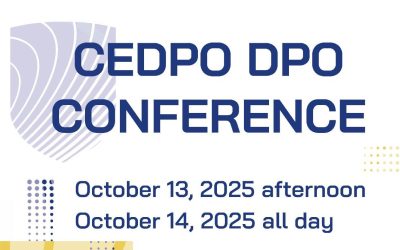
CEDPO DPO Conference 2025 – Brussels 13 & 14 October 2025
REGISTRATION FOR THE CEDPO DPO CONFERENCE 2025 IS NOW OPEN! CEDPO is hosting its #DPOConference25' once again in October bringing together European DPOs and data protection practitioners to exchange with the European regulatory and legislative community on the future of the profession, on data governance issues and on the GDPR and its interplay with the EU Digital Strategy. Mark your Calendars:...

CEDPO Webinar – 20 May 2025
AI and Fundamental Rights Impact Assessments: what are they and how to apply them under the EU AI Act. Date: 20 May 2025, 4-5:30PM CET Panellists: Moderator: Paul Jordan: Senior Policy Advisor, CEDPO Elena Gurevich: AI Policy-Curious Attorney | AI Legal Strategy, Governance & Compliance | EU GPAI Code of Practice Working Groups | Owner @ EG Legal Services | Director of Development at Centre...
CEDPO General Assembly 2025
Bucharest CEDPO Statement – February 2025 CEDPO held its General Assembly 2025 in February Bucharest. The objectives of the meeting were (i) to discuss the current European data protection and digital legislative landscape, (ii) take stock of member observations and activities in 2024, and (iii) define common priorities and objectives for the CEDPO work program of 2025-2026. The meeting was...
2024 CEDPO DPO Survey
In the DPO's Own Words: “Trends and Challenges beyond 2024” The 2024 CEDPO DPO Survey stands as a testament to our commitment to understanding and advancing the role of data protection officers across Europe. At a time when the regulatory landscape grows increasingly complex, this report sheds light on the realities faced by DPOs—highlighting their challenges, evolving responsibilities, and...
Micro-Insight Series: “Fundamental Rights Impact Assessments: What are they? How do they work?”
CEDPO AI and Data Working Group Micro-Insights Series January 2025 Authors: Thomas Ajoodha, Jared Browne You can download the paper here:
To Scrape or Not to Scrape? Analysing the Role of Data Scraping in the Training of AI Models
CEDPO Webinar 3 December 2024, 3PM CET (9AM EST)Panellists Moderator: Paul Jordan: Senior Policy Advisor, CEDPO David Patariu: legal representative for the Mitigating Unauthorized Scraping Alliance (MUSA) and a Senior Associate in the Technology and Innovation Group at Venable LLP. Daniel J. Solove: Professor of Intellectual Property and Technology Law at the George Washington University Law...
